Ask Us!
Frequently Asked Questions
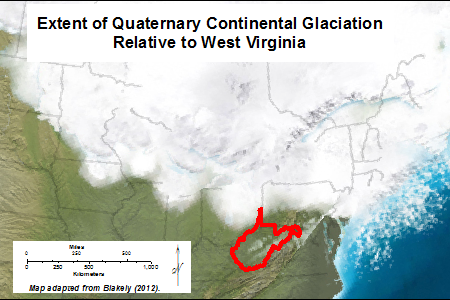
How much of West Virginia was covered by glaciers during the "Ice Age?"
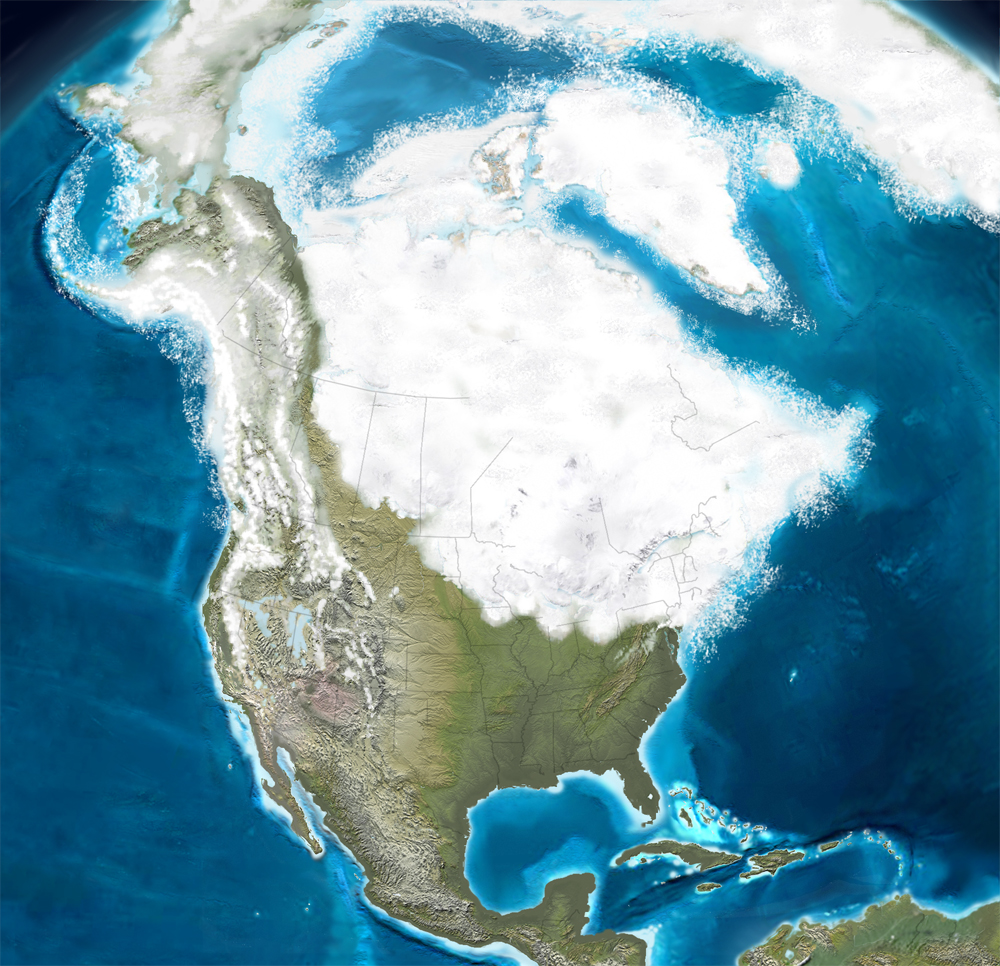
While no part of the State was covered by glacial ice during the stages of glacial
advance in the Wisconsinan stage, the climate in West Virginia, however, was several degrees
colder than it is today. Peri-glacial (in front of the glacier) effects can be seen in
Cranesville Swamp in Preston County and Cranberry Glades in Pocahontas County, which have
been bogs or lakes at least since the coldest period of the last glacial epoch, and in
patterned-ground features (i.e., the effects of ground frost) at Dolly Sods and
the Canaan Mountain/Valley area in Tucker County and Spruce Knob in Pendleton County.
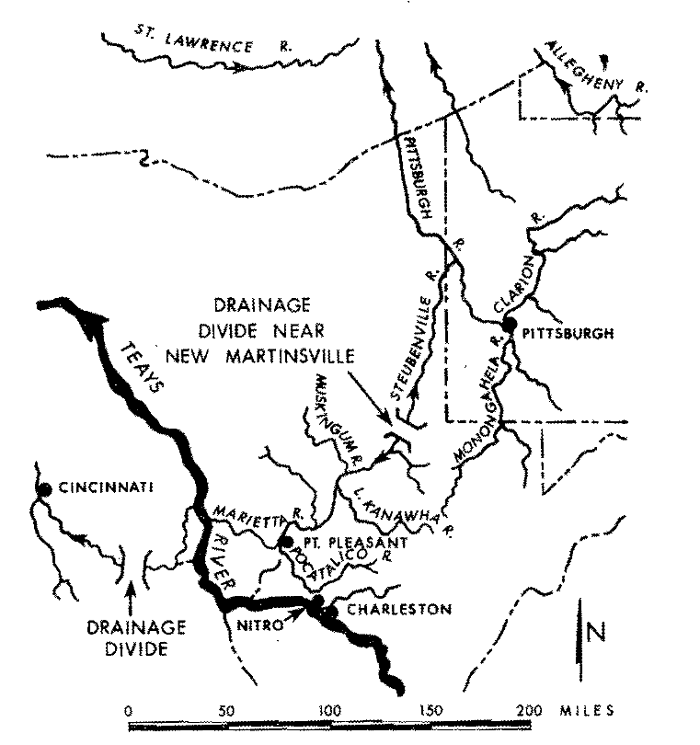
Some stream drainage patterns that existed in the State prior to the "Ice Age" were
altered by the presence of glaciers to the north. The Teays River in the southern part of
the State was the major drainage outlet, following the trend of the present New and
Kanawha rivers to near Nitro and then westward toward Huntington in the broad valley
now occupied by Interstate 64.
The path of the Ohio River as we now know it reflects a substantial change. Along
the border of the northern panhandle, north from Moundsville, there is evidence that an
ancestral river flowed north. There is widespread belief among geologists that the
glaciations of North America during the past two million years were responsible in part for
creating the Ohio River drainage system that exists today. A major abandoned channel is
today downtown Weirton. The development of the steel industry took advantage of this
abandoned channel above flood level as "flat land" on which to build the steel mills.
In the northern part of the State, ancient Glacial Lake Monongahela was formed by
outwash, or possibly ice, damming the north-flowing Monongahela River and its tributaries
just above the tip of the northern panhandle. This lake covered all land below 1,100 feet
in elevation in parts of northern West Virginia as far south as Weston, and in southwestern
Pennsylvania. We can attribute the sandy and silty soils from Fairmont upstream and the
varved clays in the Morgantown area to the presence of this lake.
Further information:
- "The Ice Age in West Virginia", WVGES Mountain State Geology, 1982, p. 26-33;
- "Legacy from the Ice Age", WVGES Mountain State Geology, 1987, p. 29-32.M
Page last revised: November 10, 2005
Please send questions, comments, and/or suggestions to webmaster.
Page created and maintained by:
West Virginia Geological and Economic Survey
Address: Mont Chateau Research Center
1 Mont Chateau Road
Morgantown, WV 26508-8079
Telephone: 304-594-2331
FAX: 304-594-2575
Hours: 8:00 a.m. - 5:00 p.m. EST, Monday - Friday
Permission to reproduce this material is granted if acknowledgment is given
to the West Virginia Geological and Economic Survey.